How to Get More Weekday Airbnb Bookings
Weekday gaps usually need a different fix from weak weekends. This guide gives small hosts a practical way to diagnose, price and market Monday to Thursday nights.

The short version
- Do not cut the whole calendar before you know whether the problem is views, conversion, minimum stays or gap nights.
- Weekday guests often need work friendly details, fast wifi, easy arrival, parking, laundry and a clear invoice or receipt process.
- Use different rules for Monday to Wednesday, Sunday nights, Thursday bridge nights, weekend protection and last minute gaps.
- Know your lowest profitable weekday rate before adding discounts, especially where cleaning and turnover costs eat the margin.
- Extra channels can help, but only if calendar sync, house rules and guest messages are under control.
If you are wondering how to get more weekday bookings on Airbnb, the answer is not usually to slash every night. Weekday demand comes from different guests, different search patterns and different friction points than Friday and Saturday demand.
For a host with 1 to 10 units, the job is simple: find the weekday guest, remove the settings that hide your listing, price the soft nights properly, and keep operations tight enough to accept shorter notice stays without creating problems.
Why weekday bookings need a different playbook
A full Friday and Saturday does not prove your listing is correctly priced for Monday to Thursday. It proves there is leisure demand at the weekend. Weekday guests may be travelling for work, hospital shifts, university visits, court dates, relocation, contractor projects, conferences, sports tournaments or a quiet remote work break.
For this guide, weekday nights means Sunday to Thursday. In many leisure markets, Monday to Wednesday are the hardest. Thursday is often a bridge night because it can turn a Friday arrival into an easier long weekend. Sunday can be either weak or valuable, depending on whether guests extend after a weekend.
Airbnb also does not rank listings on price alone. Airbnb says search is influenced by factors including price, listing quality, popularity, availability, response times, acceptance behaviour, stay restrictions, hospitality and reviews in its guide to how Airbnb search works. That means weekday fixes have to cover settings, copy, photos, guest type, operations and pricing.
The best weekday rate is not the lowest rate, it is the lowest rate you can sell profitably to the right guest.
If you want general context on occupancy before changing your calendar, compare this guide with Airbnb occupancy rate benchmarks.
Diagnose the weekday problem before changing prices
Start with a clean diagnosis. Do not change pricing, minimum stays, photos and discounts on the same day, then guess what worked. Look at the last month and split the issue into one of four patterns.
| Symptom | Likely cause | First fix | Metric to check after 14 days |
|---|---|---|---|
| Low weekday views | Search visibility, restrictions or weak demand | Open availability, reduce close in minimums, improve title | Weekday views and saves |
| Views but no bookings | Price, listing copy or trust issue | Improve work friendly copy, photos and weekday rate | Inquiry to booking rate |
| Weekends only | Leisure guests like the place, weekday guests do not see the reason to book | Target business travellers, remote workers and local demand | Monday to Thursday occupancy |
| Empty gap nights | Rules block short stays or the rate is too high for one spare night | Add gap night and last minute rules | Number of orphan nights sold |
For example, if a host has strong weekend occupancy but poor weekday occupancy, they should fix weekday pricing and guest targeting before touching weekend rates. Keep weekend demand protected unless the weekend itself is the problem.
Airbnb says more open dates make a listing more likely to match guest search criteria, and it specifically suggests reducing stay restrictions such as minimum and maximum length of stay where appropriate in its search ranking guidance. That matters because a blanket minimum stay can remove you from many shorter weekday searches.
Check these numbers before you edit anything: weekday occupancy, weekend occupancy, average lead time, conversion rate, save rate, message rate and gap nights. RevPAN, revenue per available night, is useful because it stops you celebrating cheap bookings that do not improve profit.
Find the weekday guest segments in your market
Weekday demand is local. A beach cabin, downtown apartment and suburban house can all be good listings, but they rarely have the same Monday to Thursday buyer.
Map the area around your property and list demand sources within an easy journey. Include hospitals, universities, business parks, courts, airports, industrial estates, film studios, theatres, sports venues, wedding venues, construction sites and conference centres. Then check their calendars, not just their websites. Search for terms like visiting faculty, induction week, outpatient clinic, trade show, roadworks, tournament, relocation package and contractor accommodation.
Use this worksheet for each property:
| Segment | Why they visit midweek | What they need | Phrase to add to the listing |
|---|---|---|---|
| Business travellers | Meetings, training, project work | Desk, wifi, receipts, easy arrival | Quiet flat with desk near {office district} |
| Contractors | Site work and early starts | Parking, washer dryer, simple rules | Parking and laundry near {site name} |
| Travelling nurses | Shifts and monthly stays | Quiet sleep, laundry, safe access | Calm stay near {hospital name} |
| University visitors | Visiting lecturers, parents, interviews | Flexible arrival, workspace, transport | Work ready stay near {campus name} |
| Relocation guests | House purchase, insurance, new job | Kitchen, laundry, monthly terms | Furnished base for relocation stays |
Furnished Finder says it serves monthly stay demand from travelling professionals including business travellers, medical professionals, relocating families, professors and students on its property owner page. That does not mean every Airbnb should become a mid term rental, but it shows why weekday demand may sit outside normal leisure search behaviour.
Make the listing speak to weekday guests
Generic copy wastes the first few seconds of attention. A title like “Cosy apartment” says almost nothing to a Tuesday guest. A title like “Fast wifi and desk near hospital” gives a reason to click.
Your weekday photo set should show the practical stay, not only the pretty stay. Add photos of the desk, chair, plug sockets, wifi speed result, parking entrance, coffee setup, washer dryer, blackout curtains, smart lock or keypad, and exterior arrival route. Airbnb says a dedicated workspace can be a table or desk used just for working, with a power outlet and comfortable chair, and that hosts can verify wifi speed in the app in its remote worker hosting guidance.
Airbnb also explains that guests can see wifi speed details when a host has run the speed test, and that a speed of 50 Mbps or more can show as fast wifi in its wifi speed help page. If your listing is good for calls, prove it with the listing details and a screenshot style photo of the result.
Amenity checklist for weekday guests: verified wifi speed, dedicated workspace, desk lamp, comfortable chair, spare charger, coffee, iron, laundry, blackout curtains, parking details, quiet hours, easy receipt process where your platform allows it, and a guidebook section for nearby work locations.
A practical base for work trips to {area}. The flat has {wifi speed} wifi, a proper desk, a comfortable chair, easy arrival after work, {parking detail} and quick routes to {office hospital venue}. Quiet hours are set so guests can sleep before early starts.Settle in for a focused work stay in {neighbourhood}. You will have a dedicated workspace, reliable wifi, coffee, laundry, blackout curtains and a kitchen for normal weekdays. The guidebook includes nearby coffee, groceries, gyms and quiet places to work.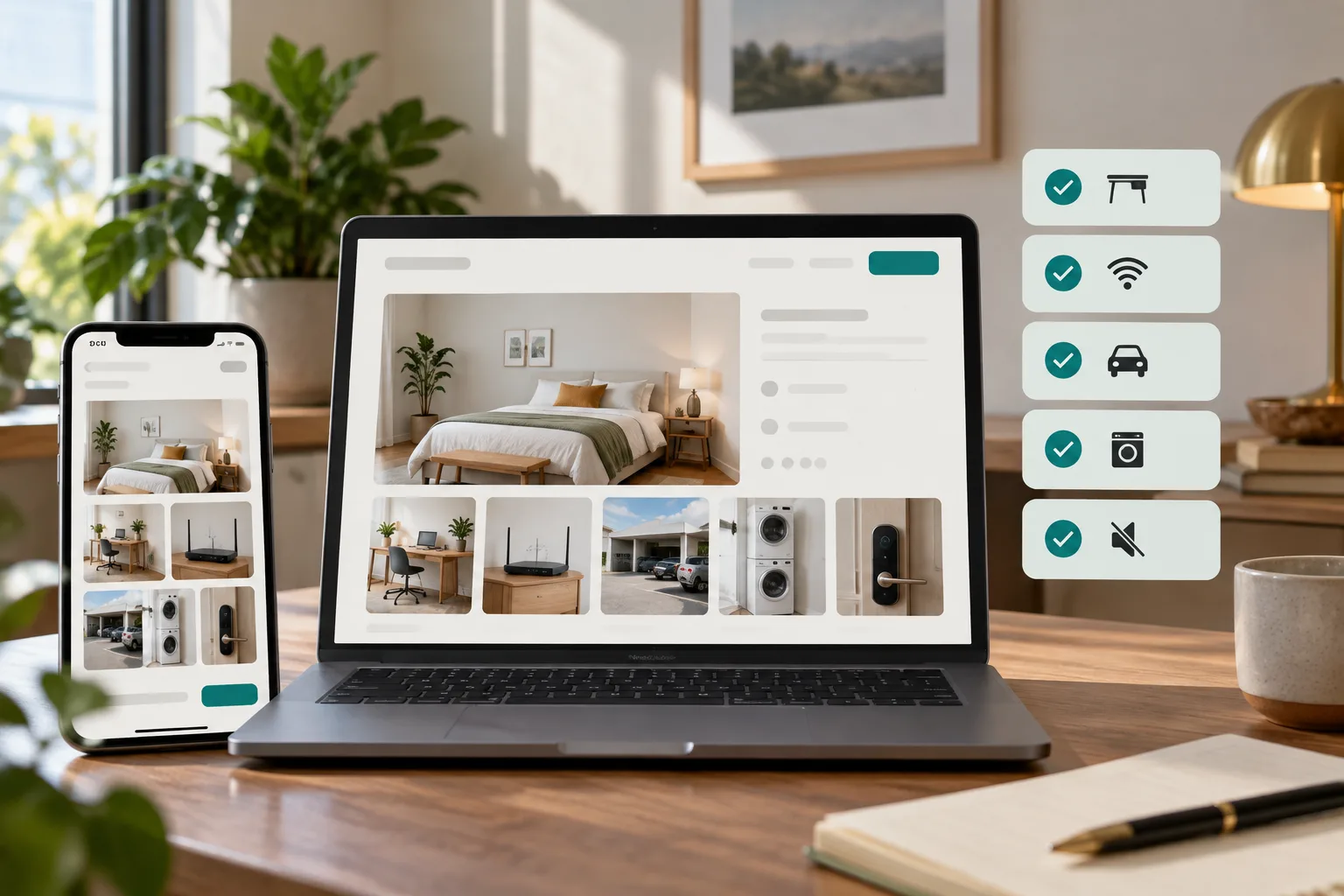
Set weekday pricing without training guests to wait
Weekday pricing should usually differ from weekend pricing, especially in leisure markets. The aim is not to lower every night. The aim is to shape demand: fair Monday to Wednesday pricing, useful Sunday and Thursday bridge rates, sensible last minute rates, and gap night rates that still make money.
Airbnb says hosts can use length of stay discounts, last minute discounts, early discounts, custom promotions and other price tools in its pricing control guidance. Airbnb also introduced dynamic pricing that can use local demand, listing details, seasonality and guest behaviour, with minimum and maximum price limits, according to its dynamic pricing announcement.
Use this practical ladder:
| Rate type | When to use it | Operator note |
|---|---|---|
| Base weekday rate | Normal Monday to Wednesday | Set below weekend, above break even |
| Sunday bridge rate | After a weekend booking or for leisure extensions | Useful for reducing empty Sunday nights |
| Thursday bridge rate | Before a weekend booking | Sell as easier arrival, not a bargain bin |
| Last minute rate | Close to arrival when the night is still empty | Keep a floor so panic pricing does not win |
| Gap night rate | One spare night between bookings | Only use if cleaning and access are workable |
| Monthly rate | Slow season or professional demand | Check local rules and utility exposure first |
To calculate your lowest profitable weekday rate, use:
Minimum profitable rate equals turnover cost plus cleaning cost not covered by the fee plus utilities plus platform fee allowance plus consumables plus desired margin.
Airbnb says cleaning costs can be incorporated into your nightly price, and that a cleaning fee is intended to pay for cleaning supplies or professional housekeeping, not to earn extra money, in its cleaning fee guidance. It also says service fees are a percentage of the host nightly price plus fees, including cleaning fees, in its service fee update, so include fee impact in your floor.
Test one pricing change for two weeks before stacking several discounts. If views rise but bookings do not, the listing may still be too expensive or not convincing enough. If bookings rise but profit falls, tighten the floor.
Use minimum stay rules by day of week
A blanket minimum is easy to manage, but it can hide your listing from the exact weekday searches you need. A three night minimum every day may protect weekends, but it can block a Tuesday to Thursday business trip or a one night gap between two bookings.
Use rule logic rather than one rule for the whole calendar. Far out, protect the nights that normally sell. Near arrival, open soft weekdays if the operational risk is acceptable.
| Booking window | Weekday minimum | Weekend minimum | Best use |
|---|---|---|---|
| Far out | Two nights | Three nights | Protect strong dates while staying bookable |
| One month out | Two nights | Two or three nights | Loosen weaker weekdays |
| Two weeks out | One or two nights | Two nights | Fill soft nights without harming prime weekends |
| Three days out | One night if profitable | One or two nights | Sell otherwise empty inventory |
| Gap night | One night | One night if cleaning allows | Turn orphan nights into revenue |
Airbnb says hosts can reduce restrictions like minimum and maximum length of stays to match more guest searches in its search guidance. Vrbo also notes that its calendar can manage minimum stay requirements in its calendar feature help page, so the principle applies across channels.
Worked example: change from a three night minimum every day to one night for orphan weekdays, two nights Sunday to Wednesday, and three nights Friday and Saturday when demand supports it. Keep preparation time where your cleaner needs it. Do not sell a one night stay if the arrival, laundry and guest screening process cannot cope.
Turn weekend bookings into weekday extensions
The cleanest weekday booking is often not a new guest. It is the same guest arriving one night earlier or leaving one night later.
A Thursday add on can make a Friday arrival easier for families and groups. A Monday add on can suit remote workers, retirees and guests who would rather avoid Sunday traffic. It can also reduce turnover compared with selling a separate single night.
Send the offer after booking confirmation, then again around one week before arrival if the night is still open. Only send it when the calendar is clean, the rate is profitable and your rules allow the change.
Hi {first name}, thanks again for booking {property name}. If you would like an easier arrival, {extra night} is still open and I can add it for {price}. No pressure at all, I just wanted to offer it before I release the date to other guests.You can also add a note to the guidebook: “If you are travelling for work, ask about Sunday or Thursday extensions when available.” Keep it soft. The point is to sell spare nights without making booked guests feel like they are being pushed.
Offer weekly and monthly stays without losing money
Weekly and monthly discounts can work for remote workers, relocation guests, nurses, contractors and slow season demand. Airbnb describes weekly discounts as applying to stays of seven or more nights and monthly discounts as applying to stays of 28 nights or more in its host guide on remote work stays. Airbnb also explains that monthly stays are searches of at least 28 nights on its monthly stay help page.
Longer stays can improve net profit even at lower ADR because they reduce turnovers. Four separate weekday bookings may mean four cleans, four arrival messages, four sets of supplies and four chances of a late check out. One weekly stay can be calmer, but only if your price includes utilities, wear, maintenance and admin.
Before encouraging monthly stays, check local short let rules, tax treatment and tenancy rules. This is not optional. Longer stays can change your legal and operational position.
Monthly stay checklist: utility cap where lawful and clearly disclosed, mid stay cleaning option, starter supplies only, access code policy, mail policy, quiet hours, maintenance access, waste collection, parking rules and a clear process for date changes.
Add extra channels for weekday demand
Airbnb demand alone may not fill weekdays in every market. Channel choice should follow guest type, not fashion.
Airbnb is strong for general travel and leisure. Booking.com can suit urban, international and short stay guests, especially where travellers compare apartments with hotels. Booking.com for Business says business users can book accommodation through company accounts on its business travel help centre, which supports the point that work travel demand may sit outside Airbnb alone. Vrbo can suit family stays and whole home extensions. Furnished Finder can suit nurses, relocating guests and professionals looking for monthly stays, based on its travelling professional segments. Direct booking works best for repeat guests, local referrals and company contacts.
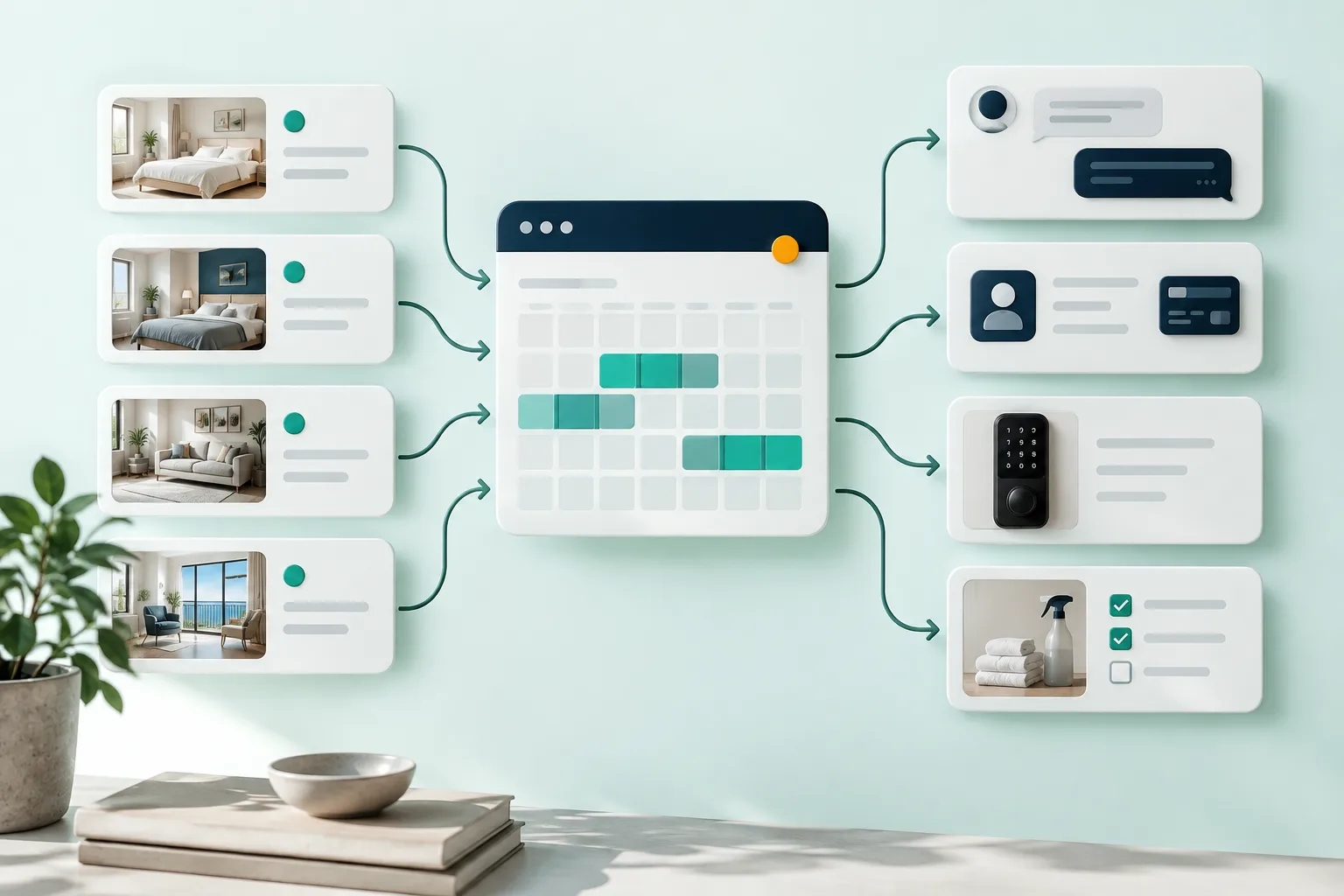
Do not add channels casually. You need calendar sync, rate logic, house rules and a double booking prevention process. Vrbo says iCal calendar links can sync calendars across multiple platforms and help prevent double bookings in its calendar sync guidance. Vrbo also says that after software integration, availability, bookings and rates should be managed in the software rather than the owner dashboard in its integration guidance.
For a small host, the minimum stack is a shared calendar, a pricing process, automated guest messages, and a lock code workflow. If you list on Airbnb and Booking.com, read how to sync Airbnb and Booking.com calendars before opening dates.
Build local weekday partnerships
Local partnerships are slow at first, then useful. Start with companies that repeatedly place people near your property: coworking spaces, hospitals, universities, HR teams, relocation agents, contractors, conference venues, wedding venues, estate agents, gyms and local offices.
Make the offer simple. Do not ask them to understand your pricing grid. Give them a page or PDF called “Midweek stays near {landmark}” with property photos, parking, wifi, desk details, walking times, invoice process and contact details.
Hi {name}, I run {property name}, a work friendly short let near {landmark}. We often have Sunday to Thursday availability for staff, contractors and visiting teams who need a quiet place with wifi, laundry, parking and easy arrival. If useful, I can send a preferred midweek rate sheet for {company name} and keep the booking process simple for your team.

Best,
{your name}Hi {name}, I host guests at {property name} near {area}. Many are in town for work during the week. Would you be open to a small local perk for my guests, such as {day pass offer}, in return for being featured in my digital guidebook and pre arrival message?
Best,
{your name}Then add a guidebook section for each segment: “For hospital stays”, “For campus visits”, “For contractors”, “For remote work days”. This improves guest experience and gives you better copy for future review requests.
Protect quality while accepting more weekday stays
More weekday bookings are only good if they are safe, profitable and review friendly. Short notice and late arrival bookings need tighter operations, not looser standards.
Risk controls include verified guests where the platform supports it, clear house rules, lawful ID processes, payment checks, sensible deposits where supported, and no party wording. Airbnb says booking guests must be identity verified to use Airbnb, and hosts can set house rules including quiet hours, events, maximum guests and smoking in its hosting control guidance. Vrbo says house rules help guests understand what is allowed before they enquire or book in its house rules guidance.
Operational friction matters too. Airbnb says self check in lets guests access a place without the host being there in its self check in help page, and its arrival guidance recommends clear check in details, smart locks, outdoor lighting and arrival photos in check in and checkout guidance.
YourFrontDesk fits this part of the problem because weekday growth adds messages, arrivals, codes, payments, ID checks, cleaning tasks and price changes. If you need one calendar across Airbnb, Booking.com, Expedia, Vrbo and direct bookings, see short let automation for hosts and managers. For pricing floors, ceilings, booking pace and gap nights, see the Airbnb pricing engine for weekday and last minute rates. For guest communication, use these ideas alongside Airbnb automated message templates.
A simple weekday message sequence is: booking confirmation, pre arrival, check in morning, first morning check, checkout instructions and review request. Keep refunds, complaints and date changes for a person, even if a draft reply is prepared.
Measure the result with a 30 day weekday test plan
Use a short test, then decide. Do not keep changing everything because one Tuesday stayed empty.
Week one: audit views, saves, conversion, weekday occupancy, gap nights and minimum stay rules. Update your title, description, work photos and amenity list.
Week two: set weekday, Sunday, Thursday, last minute and gap night pricing. Check each rate against your profitable floor.
Week three: loosen close in minimum stays where operationally safe. Send extension offers to existing weekend guests.
Week four: contact local partners and consider one extra channel if Airbnb is still not enough.
Track weekday occupancy, RevPAN, ADR, booked lead time, inquiry to booking rate, gap nights, cleaning cost per booking and review mentions of wifi, desk, parking, quiet and easy arrival.
Decision rule: if views rise but bookings do not, fix price and conversion. If bookings rise but profit falls, tighten discounts. If Airbnb still produces weak weekday demand after the listing and rules are right, add a channel that matches the guest segment.
Next steps
Copy this checklist for each unit:
| Task | Done |
|---|---|
| Split weekday and weekend metrics | |
| Identify the main weekday guest segment | |
| Add work friendly title, copy and photos | |
| Set a profitable weekday rate floor | |
| Add Sunday, Thursday, gap and last minute logic | |
| Reduce close in weekday minimums where safe | |
| Offer Thursday or Monday extensions | |
| Check calendar sync before adding channels | |
| Automate routine guest messages | |
| Review results after 30 days |
If you want to see how this can run with one calendar, guest messages, arrivals, pricing and housekeeping in the middle, try the instant demo.
What people ask next
How do I increase my Airbnb bookings fast?
Start by checking whether the problem is low views, weak conversion, strict minimum stays or empty gap nights. The fastest safe wins are often better weekday pricing, clearer work friendly copy, close in minimum stay changes and extension offers to guests already booked.
Why am I getting views on Airbnb but no bookings?
Views without bookings usually mean the guest is interested but not convinced. Check total price, photos, reviews, title, amenities, house rules and whether the listing answers the reason a weekday guest is travelling.
Does lowering my price get more Airbnb bookings?
It can, but only if price is the real problem and the new rate is still profitable. Lower weekday rates should sit above your floor after cleaning, utilities, platform fees, consumables and margin.
Should I reduce my weekday minimum stay on Airbnb?
Often, yes, especially close to arrival or for orphan nights. Keep stronger weekend minimums if demand supports them, but do not let a blanket rule hide your listing from shorter Monday to Thursday searches.
How do I attract business travellers to my Airbnb?
Show the practical details: verified wifi speed, a proper desk, parking, laundry, easy arrival, quiet hours and proximity to the workplace. Put those details in the title, first paragraph, photos and captions.
Should I offer weekly or monthly discounts on Airbnb?
Use them when longer stays reduce turnover and fit your market, such as remote work, relocation, contractor or medical demand. Check local rules and price for utilities, cleaning, supplies and wear before offering a big discount.
How do I avoid double bookings when using multiple channels?
Use one central calendar or proper calendar sync before opening the same dates on more than one platform. Also keep rate rules, minimum stays, house rules and booking messages consistent across channels.