Can You Run an Airbnb Remotely
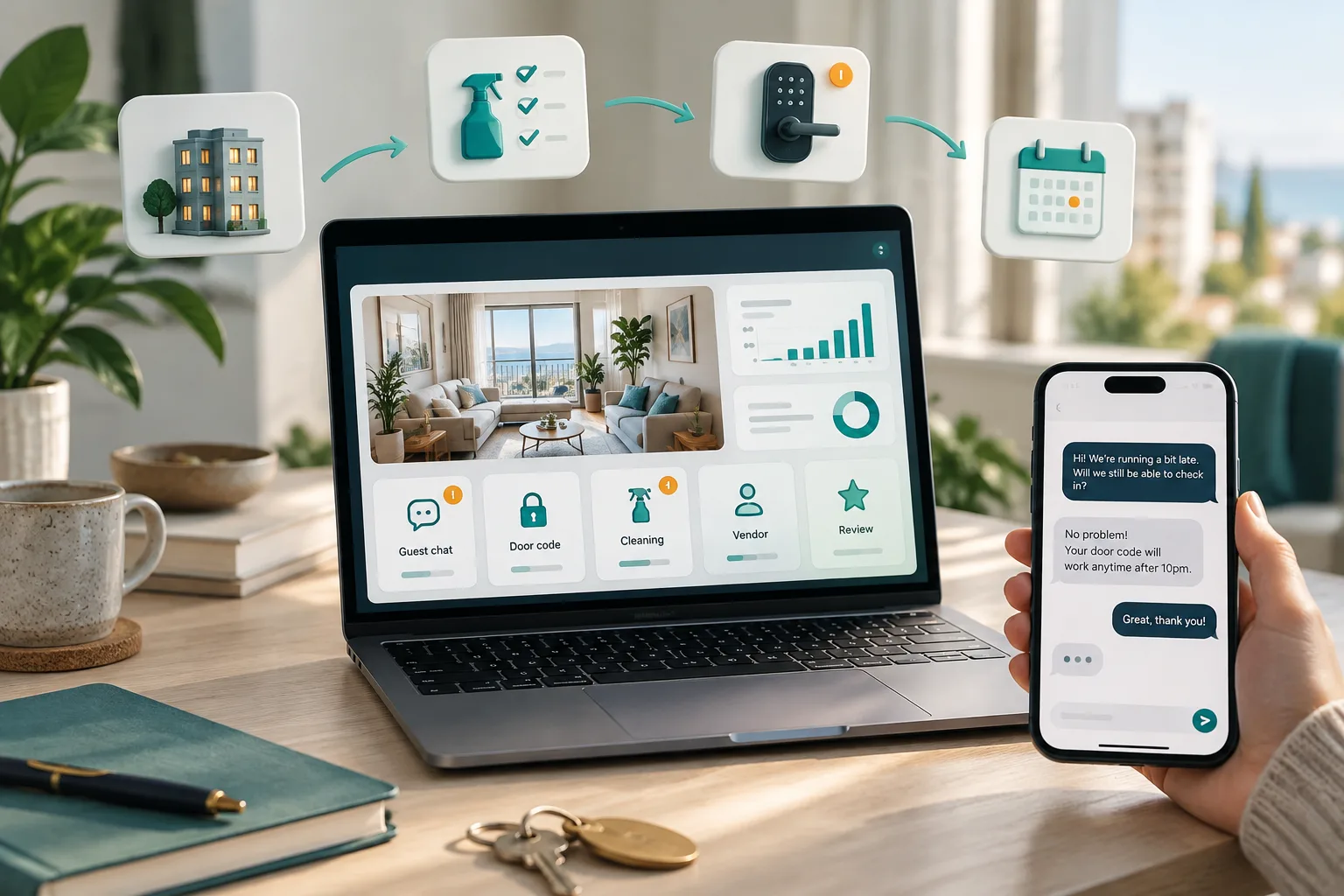
Remote Airbnb hosting works when every task has an owner, a backup and a written rule. This guide shows the operating model for hosts with one to ten units.
The short version
- You can run an Airbnb remotely, but remote does not mean nobody is local.
- The core setup is self check in, a reliable cleaner, backup access, local vendors, guest message cover and written escalation rules.
- Cleaner coordination is the biggest operational risk once you move beyond one property.
- At five to ten units, response cover and quality control become more important than adding more apps.
- Automation should handle routine messages, not refunds, safety issues, damage claims or emotional complaints without a person checking.
Can you run an Airbnb remotely? Yes, if the property has self check in, a reliable local cleaner, backup access, local maintenance contacts, automated guest messages and escalation rules. Remote does not mean nobody attends the property. It means you are not the person doing every physical task.
The simplest way to think about remote Airbnb hosting is this: every job belongs to software, you, the cleaner, a local contact, a vendor or emergency services. If a task has no owner, it will become your problem at the worst possible time.
Can you run an Airbnb remotely? The short answer
Yes, a remote Airbnb host can run one to ten units without living nearby, but only with a real operating model. You need keyless entry, a cleaner who reports properly, a backup cleaner, a local keyholder, a maintenance bench and fast guest communication.
A remote setup is ready when a guest can book, receive the right information, enter safely, get help during the stay, check out, trigger a clean and receive a review request without you visiting the property. Airbnb asks hosts to respond to guest enquiries and requests within 24 hours, so your response cover must protect that standard, especially if you have a day job or live in another time zone Airbnb response rate guidance. (airbnb.com)
Quick readiness test for one to ten units:
| Area | Remote ready standard | Backup |
|---|---|---|
| Access | Guest has a tested code before arrival | Local keyholder and lockbox |
| Cleaning | Cleaner accepts each turnover and sends photos | Backup cleaner confirmed |
| Guest messages | Routine replies are drafted or sent fast | Human checks complaints |
| Maintenance | Vendor list is saved by trade | Spend rules agreed |
| Compliance | Permit, tax and device disclosures checked | Local adviser or council contact |
Remote hosting works when the boring jobs are written down before the exciting bookings arrive.
What a remote Airbnb host actually has to manage
A host does not just manage messages. The job includes bookings, pricing, calendar sync, access, cleaning, laundry, restocking, maintenance, inspections, reviews, disputes, compliance and reporting.
Some tasks happen every stay: pre arrival messages, access code release, checkout reminders, turnover clean, linen change and review request. Some happen weekly: stock count, issue log review and pricing checks. Some happen monthly: owner reporting, deep clean planning, maintenance review and permit checks. Others only happen during exceptions: lockouts, leaks, suspected parties, damage claims, refunds and bad reviews.
Use this ownership split:
| Task | Can it be remote | Main owner | Backup owner | Failure risk |
|---|---|---|---|---|
| Guest questions | Yes | Host or message cover | Host | Poor response rate |
| Check in | Mostly | Access system | Local keyholder | Guest locked out |
| Cleaning | No | Cleaner | Backup cleaner | Bad review |
| Restocking | Partly | Cleaner | Local contact | Missing basics |
| Repairs | Partly | Vendor | Local contact | Stay disruption |
| Refunds | Yes | Host | Co host | Overpaying |
| Safety issues | No | Emergency services | Local contact | Guest harm |
Your aim is not to remove people. It is to stop every issue being routed through you first.
The remote host stack that makes it work
For one unit, the minimum stack is simple: a keypad or smart lock, a backup key, a cleaner calendar, scheduled guest messages, a digital guidebook, a shared issue log and a local vendor list. For five to ten units, add a unified inbox, one calendar across channels, cleaner task workflows, pricing rules, owner reports and written escalation rules.
YourFrontDesk fits as the system layer for hosts who want one calendar across Airbnb, Booking.com, Expedia, Vrbo and direct bookings, night desk replies from property information, arrivals with payment, ID and guidebook in one link, and door code release at the chosen hour after payment and ID. If you want to understand the automation layer without guessing, see how Airbnb automation works.
The rule is simple. Automate repeatable work, but keep judgement with a person. Refunds, complaints, date changes and anything safety related should be reviewed by a human, even if a draft reply is prepared.
Useful internal setup guides: Airbnb automated messages, self check in instructions and Airbnb cleaning checklist for cleaners.
Self check in: the part you cannot afford to improvise
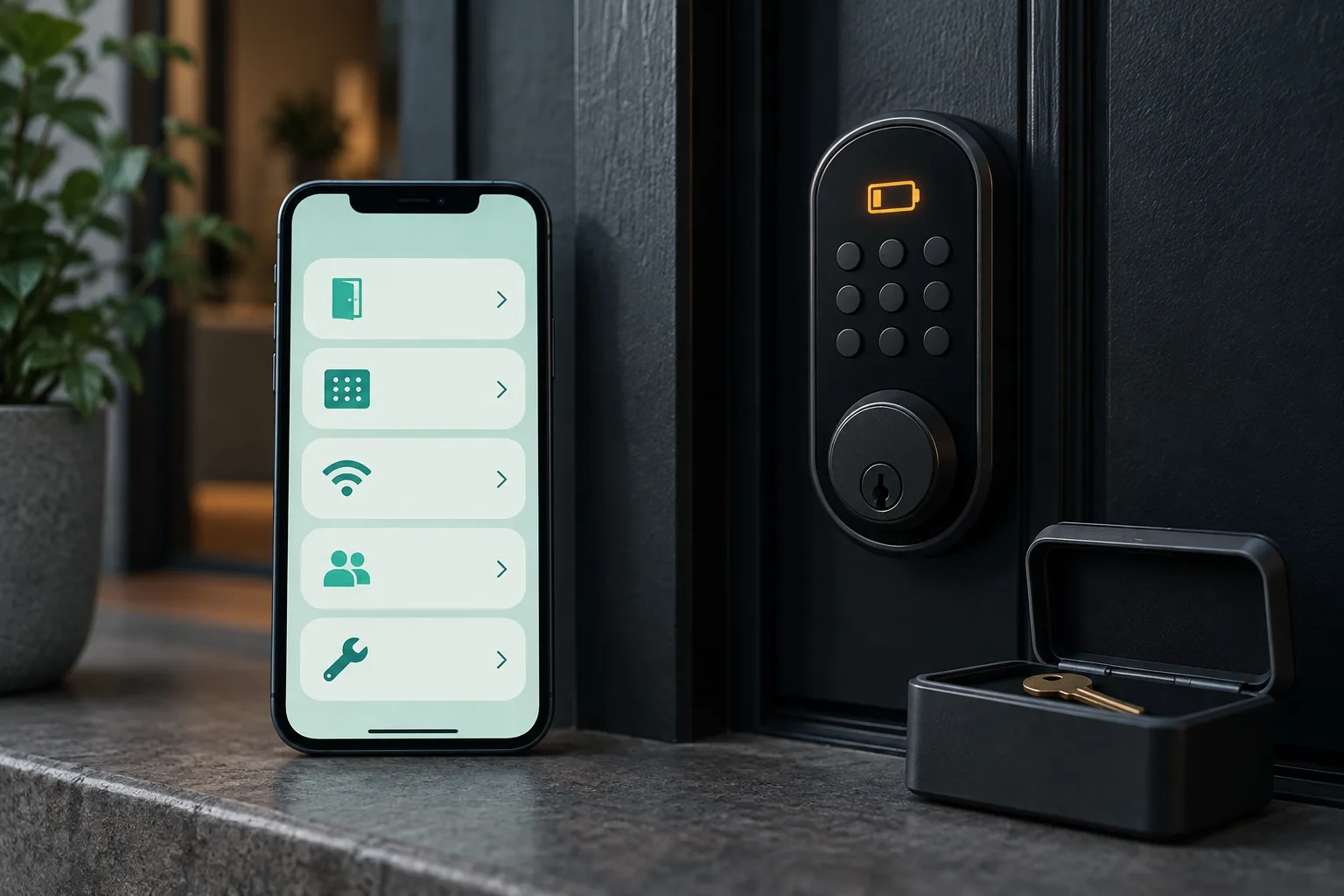
Self check in is where remote Airbnb hosting either feels professional or falls apart. A smart lock can issue guest codes, a keypad lock avoids keys, a lockbox gives a simple fallback and a key exchange service can help in managed buildings. Airbnb says connected smart locks can give guests a unique code active during their stay, and hosts should keep separate codes for themselves, co hosts and cleaners Airbnb smart lock guidance. (airbnb.com)
Your access SOP should be written like this:
- Code is created for the booking.
- Code is not released until the chosen time.
- Cleaner tests the lock after turnover.
- Backup code is stored where support can see it.
- Backup key is held by a local person.
- Locksmith number is saved.
Worked example: guest arrives at 11:30 pm and the code fails. First, ask for a photo or short video of the keypad. Second, confirm they are at the correct door. Third, try the backup code. Fourth, attempt remote opening if your lock supports it. Fifth, call the local keyholder. Sixth, if delay passes your compensation threshold, offer a fair credit and document the timeline.
For deeper access setup, use how to change Airbnb door code between guests.
Cleaner coordination is the make or break system
Your cleaner is not just a cleaner. They are quality control, first inspector, restock checker and often the first person to notice damage. A cleaner only setup can work for one simple unit. It stops being enough when same day turnovers, multiple units, frequent maintenance and guest issues start competing.
Cleaner SLA:
- Accept every job within the same working day.
- Arrive within the agreed window.
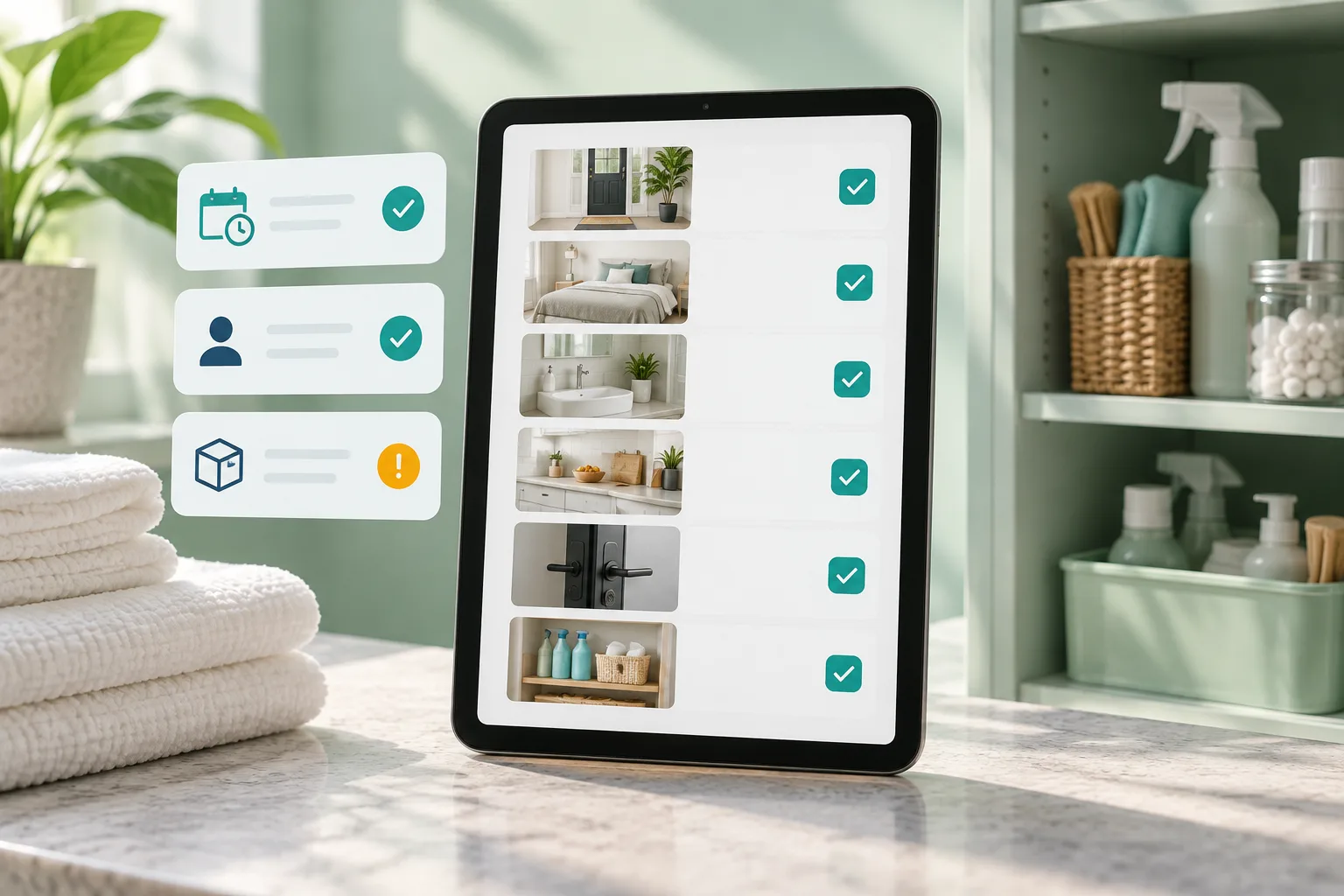
- Send room photos before marking complete.
- Report damage before moving items.
- Count key supplies.
- Confirm lock works before leaving.
- Flag anything that affects the next guest immediately.
Photo checklist by room: entrance, bedrooms, bathrooms, kitchen, oven, fridge, linen closet, thermostat, lock, bins and exterior. For same day turnover, set a hard rule: if the cleaner has not arrived by your warning time, the backup cleaner is called. Do not wait until check in.
Hi {cleaner name}, turnover for {property name} is ready.
Checkout: {checkout time}
Next check in: {check in time}
Priority: {same day or standard}
Please send photos of entrance, bedrooms, bathrooms, kitchen, lock, bins and linen cupboard before marking complete.
Please report any damage or low supplies before leaving.
For your cleaning system, use an Airbnb cleaning schedule and a room by room Airbnb cleaning checklist for cleaners.
Automated guest messages from booking to review
Remote hosts need a message flow, not just saved replies. The flow should cover booking confirmation, pre arrival, check in instructions, day of arrival reminder, mid stay check in, checkout reminder, post checkout thank you and review request.
Airbnb provides scheduled quick replies and automated guest messages, but automation should not answer everything Airbnb messaging tools. (airbnb.com) Complaints, refunds, safety issues, damage, suspected parties, legal threats and emotional guests need human review.
Hi {first name}, thanks for booking {property name}.
Your stay is confirmed for {arrival date} to {departure date}.
Before arrival, please complete {payment or ID step if required}. Your guidebook is here: {guidebook link}.
We will send check in details on {release time}. If you have a travel question, reply to this message and we will help.Hi {first name}, I hope you have had a good stay at {property name}.
Checkout is by {checkout time} tomorrow.
Before leaving, please lock the door, put used towels in {place}, take rubbish to {bin location} and message us once you have left.
Safe travels.A night cover plan protects your response rate. For one unit, check messages at breakfast, lunch, early evening and before bed. For two to four units, add alerts for check in days and same day turnovers. For five to ten units, use shared coverage so nights and weekends are not dependent on one tired host.
Escalation rules for the problems automation cannot solve
Escalation rules stop panic. Write them before launch and share them with cleaners, co hosts and local contacts.
| Level | Examples | Response target | Owner | Local action | Refund rule |
|---|---|---|---|---|---|
| 0 | Parking, Wi Fi name, towels | Fast routine reply | Automation or host | None | None |
| 1 | Missing item, slow Wi Fi, noisy neighbour | Same hour | Host | Cleaner if needed | Small goodwill only |
| 2 | No hot water, heating fault, cleaner missed item | Immediate triage | Host | Vendor or cleaner | Case by case |
| 3 | Lockout, water leak, HVAC failure | Immediate | Host plus local contact | Attend property | Credit if stay impacted |
| 4 | Fire, injury, break in, gas smell | Emergency first | Guest and emergency services | Local contact after | Human decision |
Safety emergencies must go to local emergency services first, then the host and local contact. Do not make a guest wait for you to diagnose a fire alarm, gas smell or injury from another city.
Decision rights matter. Cleaner can approve a re clean. Local contact can approve a locksmith callout. Handyman can spend up to your written limit. Refunds, damage claims and guest compensation stay with the host unless you have a co host agreement.
For damage, document quickly. Airbnb says Host damage protection can reimburse eligible hosts up to 3 million US dollars under AirCover for Hosts, subject to its terms Airbnb Host damage protection. (airbnb.com)
Who you need locally and what each person owns
Your local bench should include primary cleaner, backup cleaner, handyman, plumber, electrician, HVAC technician, locksmith, pest control, laundry service, neighbour or building contact and emergency keyholder. A co host is optional at one unit, useful at two to four units and often necessary at five to ten units if you cannot cover messages and decisions.
Local contact sheet fields:
Role, name, phone, backup phone, coverage hours, callout fee, access held, spending authority, usual response time, notes.
Interview cleaners and vendors for short let work, not normal domestic work. Ask about same day turnover comfort, photo reporting, emergency availability, supply handling, linen rotation and how they prefer to receive jobs. A good cleaner who refuses photos is not a remote hosting cleaner.
Compliance is local. Check STR registration, lodging tax, lease or HOA rules, smart device disclosures, camera rules and local responsible agent requirements. For example, Miami Dade requires a certificate of use to be displayed with responsible party details for vacation rentals Miami Dade vacation rental rules. (miamidade.gov) Placer County says a local contact must be reachable 24 hours a day, live within 35 driving miles and have access and authority to manage the unit Placer County STR programme. (placer.ca.gov)
How the setup changes from one unit to ten units
One unit can often run with host, cleaner, backup cleaner, local keyholder and a written access plan. The risk is complacency. A single missed clean or lock failure can consume the whole week.
Two to four units need a stronger system: unified inbox, shared cleaner calendar, backup cleaner, local handyman, issue log and clear refund rules. At this size, the host is still close to every booking, but memory starts to fail. Write everything down.
Five to ten units need operations rhythm. Add remote co host or guest support cover, formal SOPs, weekly operations review, monthly unit reporting, planned maintenance budget and stricter inspection photos. The cleaner only model usually breaks here because cleaners cannot also be guest support, pricing analyst, refund approver and vendor manager.
Portfolio cadence:
| Size | People | Tools | Main risk | Cadence |
|---|---|---|---|---|
| One unit | Host, cleaner, keyholder | Lock, messages, checklist | Access failure | Weekly check |
| Two to four | Add backup cleaner and handyman | Inbox, calendar, issue log | Missed turnover | Twice weekly review |
| Five to ten | Add co host or support cover | Reporting, pricing, SOPs | Response cover | Weekly ops meeting |
Remote pricing, calendars and channel management
Pricing, minimum stays, gap nights, availability rules and review replies can all be handled remotely. The trap is setting rules once and ignoring the market. Local events, bad weather, school holidays, slow season and orphan nights still need human oversight.
A practical three unit setup might use a base price for each property, stronger weekend pricing, a two night minimum most of the year, longer minimums for peak dates and a gap night discount where a single empty night sits between bookings. That avoids dead Tuesdays without creating impossible turnovers.
YourFrontDesk includes a pricing engine with a floor and ceiling per unit, reads booking pace and gap nights, damps big swings, explains every move and reprices through the day. You can read more about the Airbnb pricing engine.
Calendar sync is non negotiable if you list across channels. One calendar in the middle reduces double booking risk and gives cleaners one source of truth. If you cannot trust your calendar, you cannot manage Airbnb remotely.
Remote hosting costs and the co host decision
Compare scope, not only percentage. A self managed remote stack usually means you pay for software, cleaning, supplies, locks, callouts and emergency reserve. A co host or remote assistant adds message cover and coordination. A full service manager adds local operations, but you give up margin and some control.
Kiplinger says vacation home owners hiring a property manager may pay 10 percent to 20 percent of monthly income, while also needing cleaning between rentals Kiplinger vacation home cost guide. (kiplinger.com) Use that as a comparison point, then ask each manager what is included: guest messages, pricing, cleaning supervision, maintenance, inspections, supplies, owner reports and emergency response.
For one unit, self management can work if your response cover is strong. For three units, the decision often turns on evenings and weekends. For eight units, your time becomes the constraint. If every checkout, cleaner question and guest message still needs you, you have built a remote job, not a remote business.
Do not forget platform fees and tax. Airbnb updated host service fee information in 2026, so check the live Airbnb fee page before modelling net revenue Airbnb host service fee information. (airbnb.com) Local lodging tax rules also vary. Los Angeles, for example, requires a Transient Occupancy Registration Certificate within 30 days after commencing business unless a stated platform withholding arrangement applies Los Angeles transient occupancy tax guide. (finance.lacity.gov)
Remote Airbnb hosting checklist before your first guest
Before your first booking goes live, check these items:
- Listing is complete and accurate.
- House rules are plain and visible.
- Self check in is tested from outside the property.
- Backup key is placed with an approved person.
- Cleaner is trained on photos and supplies.
- Backup cleaner is confirmed.
- Messages are loaded.
- Guidebook is ready.
- Wi Fi instructions are tested.
- Linen sets are counted.
- Supply closet is stocked.
- Vendor list is approved.
- Issue log is created.
- Emergency instructions are written.
- Response cover is assigned for nights and weekends.
- Pricing is reviewed.
- Calendar sync is tested.
- Compliance, tax, HOA and device disclosures are checked.
Airbnb also bans indoor security cameras in listings, while allowing disclosed exterior cameras and noise decibel monitors where policy permits, so review your devices before publishing Airbnb camera policy update. (news.airbnb.com)
Next steps
If you want to manage Airbnb remotely, start with the failure points: access, cleaning, response cover and local escalation. Then add pricing, reporting and better automation once the basics are reliable.
To see how this can work in one flow, try the instant demo.
What people ask next
Can you run an Airbnb remotely?
Yes. You need self check in, a reliable cleaner, backup access, local vendors, fast guest communication and clear escalation rules. Remote hosting still needs local people for cleaning, inspections, repairs and emergencies.
Can you manage an Airbnb from another country?
Yes, but time zone cover becomes more important. You need someone or some system watching guest messages while you sleep, plus a local contact who can attend the property if access, safety or maintenance issues occur.
What is the best way to manage an Airbnb remotely?
Build the operation around workflows, not apps. Start with access, cleaner coordination, message templates, issue logging, vendor contacts and spending rules. Then add automation where the task is repeatable and low risk.
Do you need to meet Airbnb guests in person?
Usually, no. Many guests prefer clear self check in instructions and fast replies over an in person handover. You still need a local plan for lockouts, emergencies and any building that requires a person on site.
How do you handle Airbnb emergencies remotely?
Write severity rules before launch. Safety issues go to local emergency services first, then the host and local contact. Property issues such as leaks, lockouts and HVAC failures should route to approved local vendors with spending limits.
What tasks still need a local person?
Cleaning, laundry, restocking, inspections, physical repairs, lockouts, pest visits and emergency attendance need local input. A host can coordinate these remotely, but someone near the property must be able to act.
How much does an Airbnb property manager cost?
Fees vary by market and service level. Compare exactly what is included, such as guest messages, pricing, cleaning supervision, inspections, maintenance and emergency response. A lower percentage can cost more if key work is excluded.
How many Airbnbs can one person manage remotely?
One person can often manage one to four simple units with strong systems and a good local bench. At five to ten units, response cover, cleaner supervision and quality control usually require a co host, assistant or more formal operations support.